- Home
- About
- Application Scenarios
- Equipment Product Center
- Sheet metal enclosure processing
- News
- Contact us
- العربية
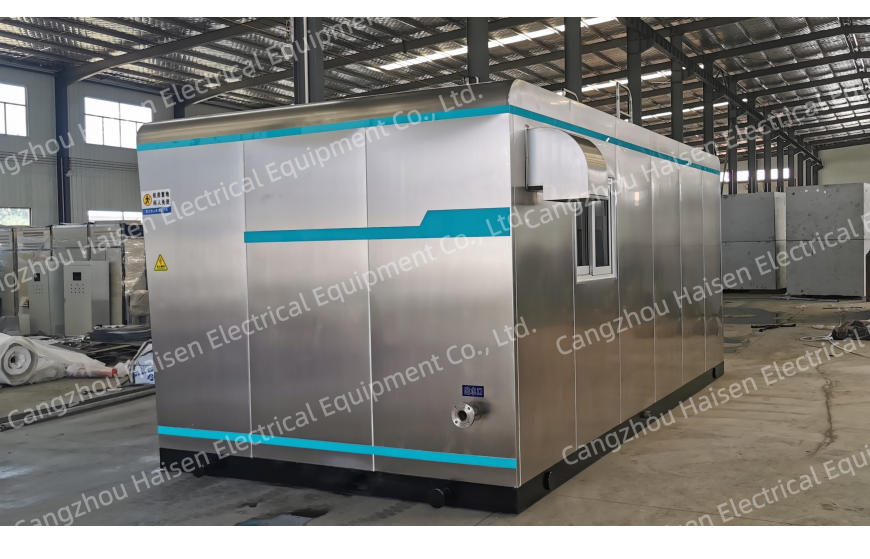
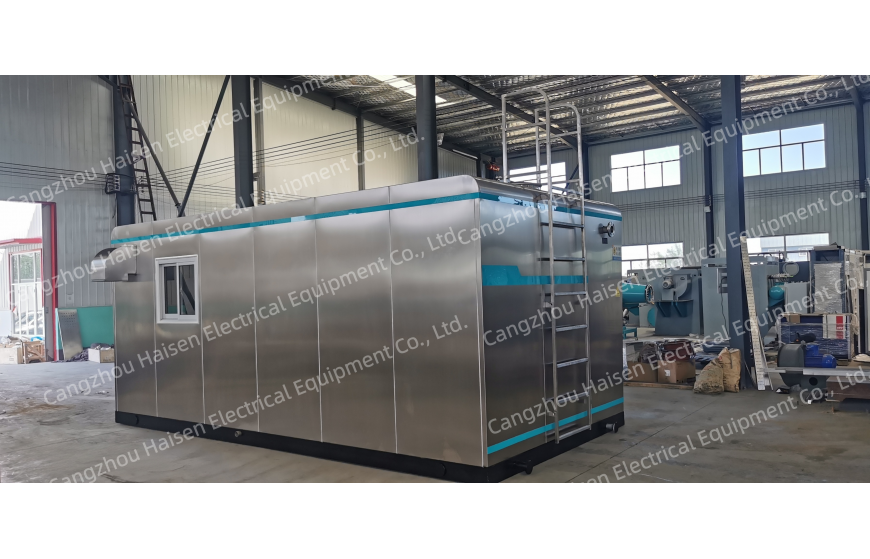
Intelligent Integrated Pump Station
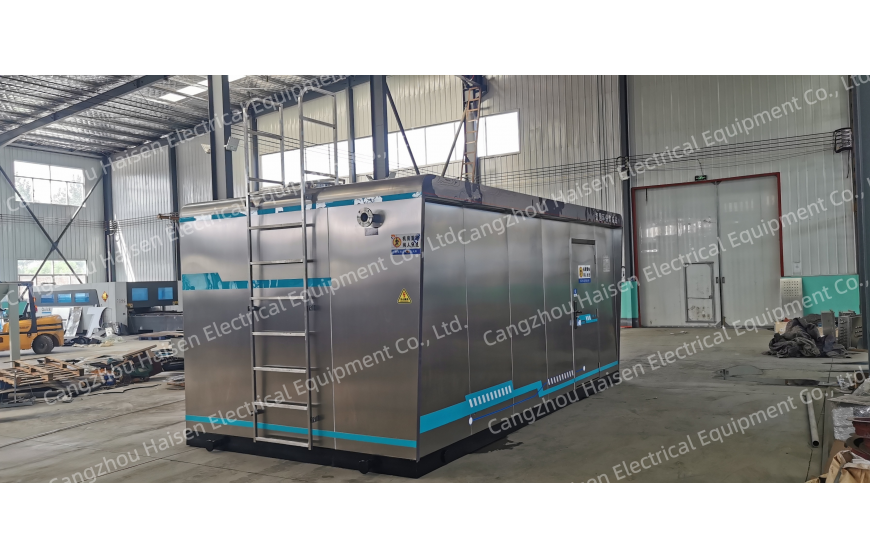
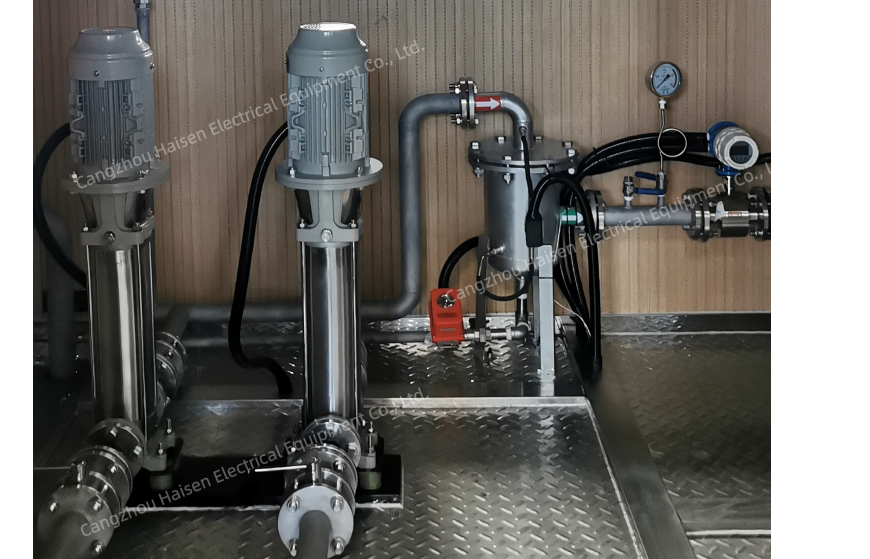
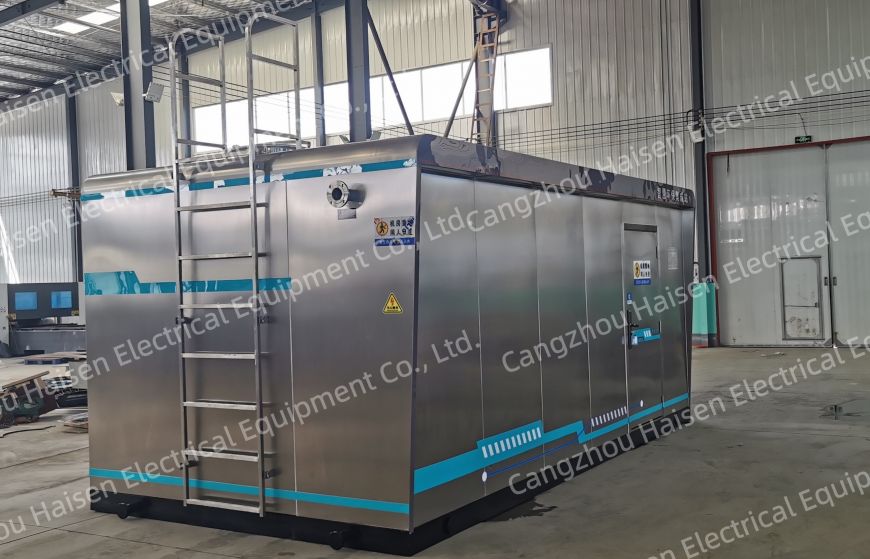
The core operating logic of the integrated pump station is based on "automatic liquid level monitoring + intelligent logic control + automatic pump start/stop / variable frequency regulation," requiring no manual intervention and enabling fully automatic unattended operation.
I. Signal Acquisition (Water Level Sensing)
A liquid level sensor (typically ultrasonic or hydrostatic type) installed inside the tank body continuously monitors the water level height within the pump station. It converts the level data into electrical signals, which are constantly fed back to the central control cabinet.
II. Logic Judgment and Command Issuance (Brain Decision-Making)
The PLC (Programmable Logic Controller) embedded in the control cabinet performs logic judgments based on preset level thresholds:
When the water level rises to the preset "start level," the PLC issues a start command;
When the water level drops to the preset "stop level," the PLC issues a stop command;
If the water level exceeds the alarm level, the PLC triggers a fault alarm or starts the standby pump.
III. Power Execution (Mechanical Drainage)
The pumps execute actions according to the control commands:
Fixed-Frequency Control (On/Off Type):
The pump operates directly at full power (mains frequency) to discharge accumulated water from the tank to the external pipeline network until the low water level is reached, at which point it stops.
Variable-Frequency Control (Constant Pressure / Demand-Based Regulation):
When equipped with a VFD (Variable Frequency Drive), the pump speed is automatically and linearly adjusted according to the water level height or discharge pressure. A higher level increases speed; a lower level decreases speed. This avoids electrical surge from frequent start/stop cycles and enables energy-efficient operation on demand.
IV. Emergency Protection (Redundancy Switching)
The system features built-in automatic fault detection. In the event of overheating, overload, phase loss, or dry-running of the operating pump, the control cabinet automatically cuts power to the faulty pump and instantly switches to the standby pump, ensuring continuous and uninterrupted system operation.
Popular recommendation